





















































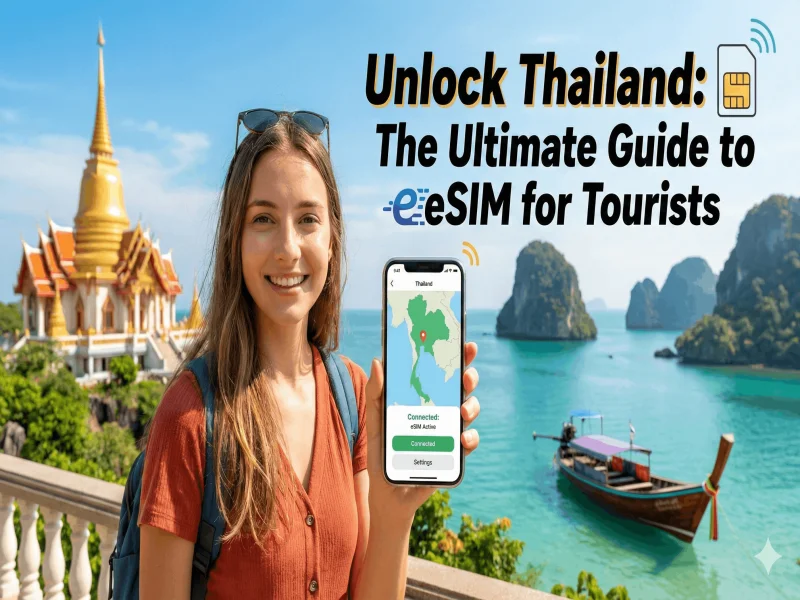
Explore Thailand seamlessly with our ultimate guide to eSIM for tourists. Stay connected effortlessly while you immerse yourself in the beauty of this vibrant country!
Why Choose eSIM for Your Thailand Trip?
As technology advances, so does the way we connect to the world around us. Traditional SIM cards have long been the standard for staying connected while traveling, but eSIM technology is rapidly changing the game. One of the primary reasons to choose an eSIM for your Thailand trip is convenience. Unlike physical SIM cards, eSIMs are embedded within your device, eliminating the need to handle tiny, easily lost pieces of plastic. This means no more fumbling around with SIM card ejector tools or worrying about misplacing your SIM card while switching between multiple countries.
Another significant advantage of using an eSIM in Thailand is the ease of activation. With a traditional SIM card, you often have to visit a local store or kiosk to purchase and activate it. This can be time-consuming and sometimes frustrating, especially if there are language barriers. In contrast, eSIMs can be activated remotely, often within minutes, through a simple online process. This allows you to get connected as soon as you land in Thailand, without the hassle of searching for a local provider.
Moreover, eSIMs offer greater flexibility and control over your mobile data usage. Many eSIM providers offer customizable data plans that can be tailored to your specific needs, whether you require a small amount of data for occasional use or a more extensive plan for heavy internet usage. This flexibility ensures that you only pay for what you need, helping you manage your travel budget more effectively. Additionally, eSIMs often provide better network coverage and faster internet speeds, ensuring that you stay connected smoothly throughout your travels in Thailand.
How to Get an eSIM Before Traveling to Thailand
Securing an eSIM for your Thailand adventure is a straightforward process that can be done from the comfort of your home, well before you embark on your journey. The first step is to ensure that your smartphone or device supports eSIM functionality. Most modern smartphones, including high-end models from Apple, Samsung, Google, and Huawei, are equipped with eSIM capabilities. Check your device’s specifications or consult the manufacturer's website to confirm compatibility.
Once you have verified that your device supports eSIM, the next step is to choose an eSIM provider. There are numerous providers that offer eSIM services for travelers, each with different plans and coverage options. Research the various providers to find one that best suits your needs. Consider factors such as data allowances, pricing, and the provider’s reputation for reliability and customer service. Many eSIM providers offer user-friendly websites and mobile apps that make it easy to compare plans and make a purchase.
After selecting a provider, the process of obtaining an eSIM typically involves purchasing a data plan and receiving a QR code. This QR code is essential for activating the eSIM on your device. The provider will usually send the QR code via email or make it available for download on their website or app. Make sure to save this QR code securely, as you will need it to activate your eSIM once you arrive in Thailand. By following these simple steps, you can ensure that you have a reliable and convenient eSIM ready to go before you even leave home.
Popular eSIM Providers for Tourists in Thailand
When it comes to choosing an eSIM provider for your trip to Thailand, there are several reputable options to consider. Each provider offers different plans and features, so it’s important to compare them to find the one that best meets your needs. Some of the most popular eSIM providers for tourists in Thailand include Airalo, Truphone, and GigSky.
Airalo is a well-known eSIM provider that offers a wide range of data plans specifically designed for travelers. They have a dedicated Thailand plan that provides excellent coverage across the country. Airalo’s plans are flexible, allowing you to choose from various data allowances based on your usage requirements. Their user-friendly app makes it easy to purchase and activate your eSIM, and their customer support is highly regarded for its responsiveness and helpfulness.
Truphone is another popular eSIM provider that offers global connectivity with a specific focus on providing seamless service in Thailand. Truphone’s plans are known for their competitive pricing and reliable network coverage. They offer both short-term and long-term plans, making them a great option for both brief vacations and extended stays. Truphone also provides a straightforward activation process, with a detailed guide to help you set up your eSIM quickly and easily.
GigSky is a global eSIM provider that offers extensive coverage in Thailand. Their plans are designed to cater to various data needs, from light users to heavy internet consumers. GigSky’s app allows you to manage your eSIM conveniently, and they offer excellent customer support to assist with any issues you may encounter. With GigSky, you can enjoy high-speed internet access throughout your travels in Thailand, ensuring that you stay connected wherever you go.
Step-by-Step Guide to Activating Your eSIM
Activating your eSIM in Thailand is a simple process that can be completed in just a few minutes. Follow these steps to ensure a smooth and hassle-free activation:
Purchase an eSIM Plan: Before you can activate your eSIM, you need to purchase a data plan from your chosen eSIM provider. This can usually be done through the provider’s website or mobile app. Once you have completed your purchase, you will receive a QR code that is essential for the activation process.
Access Your eSIM Settings: On your smartphone, navigate to the settings menu and look for the option to add a new cellular plan. The exact location of this option may vary depending on your device, but it is typically found under “Cellular” or “Network & Internet” settings.
Scan the QR Code: Once you have located the option to add a new cellular plan, select it and follow the prompts to scan the QR code provided by your eSIM provider. Use your device’s camera to scan the QR code, and the eSIM profile will be downloaded and installed on your device.
Activate Your eSIM: After the eSIM profile has been installed, you will need to activate it. This usually involves selecting the new eSIM profile as your primary data plan and enabling cellular data. Follow the on-screen instructions to complete the activation process.
Test Your Connection: Once your eSIM is activated, it’s a good idea to test your connection to ensure everything is working correctly. Open your web browser or any app that requires an internet connection to verify that you have access to mobile data. If you encounter any issues, refer to your eSIM provider’s troubleshooting guide or contact their customer support for assistance.
By following these steps, you can easily activate your eSIM and start enjoying seamless connectivity during your travels in Thailand.
Coverage and Network Availability in Thailand
One of the key factors to consider when using an eSIM in Thailand is the coverage and network availability. Thailand boasts a robust telecommunications infrastructure, with several major mobile network operators providing extensive coverage across the country. The three main mobile network operators in Thailand are AIS, TrueMove H, and DTAC. Each of these operators offers reliable network coverage and high-speed internet access, ensuring that you stay connected throughout your travels.
AIS (Advanced Info Service) is the largest mobile network operator in Thailand, known for its extensive coverage and excellent service quality. AIS provides 4G LTE coverage in most urban and rural areas, making it a popular choice for both locals and tourists. With AIS, you can expect reliable internet access in major cities like Bangkok, Chiang Mai, and Phuket, as well as in more remote regions.
TrueMove H is another leading mobile network operator in Thailand, offering comprehensive coverage and competitive data plans. TrueMove H is known for its high-speed internet access and robust network infrastructure. They provide 4G LTE coverage in most parts of the country, ensuring that you have a stable connection whether you’re exploring bustling cities or relaxing on tropical beaches.
DTAC (Total Access Communication) is the third major mobile network operator in Thailand, providing reliable coverage and quality service. DTAC offers 4G LTE coverage in urban and suburban areas, with a focus on delivering high-speed internet access to its customers. While DTAC’s coverage may not be as extensive as AIS and TrueMove H, it still provides reliable connectivity in most tourist destinations.
When using an eSIM in Thailand, it’s important to choose a provider that partners with these major network operators to ensure optimal coverage and network availability. Most eSIM providers have agreements with multiple operators, allowing them to offer seamless connectivity and high-speed internet access throughout the country.
Comparing eSIM vs. Traditional SIM Cards
When planning your trip to Thailand, you may be wondering whether to opt for an eSIM or a traditional SIM card. Both options have their pros and cons, and the best choice depends on your specific needs and preferences.
One of the main advantages of eSIMs is convenience. Unlike traditional SIM cards, which require you to physically insert and remove the card from your device, eSIMs are embedded within your device and can be activated remotely. This eliminates the need to handle small, easily lost pieces of plastic and allows you to switch between different data plans and providers with ease. Additionally, eSIMs can be activated within minutes, allowing you to get connected as soon as you arrive in Thailand.
Another benefit of eSIMs is flexibility. Many eSIM providers offer customizable data plans that can be tailored to your specific needs. This means you can choose a plan that provides the right amount of data for your usage, whether you need a small amount for occasional use or a larger plan for heavy internet consumption. In contrast, traditional SIM cards often come with fixed data plans that may not offer the same level of customization.
On the other hand, traditional SIM cards have their own set of advantages. One of the main benefits is that they are widely available and can be purchased from various retailers and mobile network operators in Thailand. This means you can easily obtain a local SIM card upon arrival and start using it immediately. Additionally, traditional SIM cards may offer better compatibility with older devices that do not support eSIM technology. Some travelers also prefer the familiarity of using a physical SIM card, as it allows them to keep their primary SIM card in their device and switch to the local SIM card as needed.
Ultimately, the choice between an eSIM and a traditional SIM card depends on your individual preferences and needs. If you value convenience, flexibility, and the ability to easily switch between different data plans and providers, an eSIM is likely the better option. However, if you prefer the familiarity of a physical SIM card and the ability to purchase one locally, a traditional SIM card may be more suitable.
Tips for Using Your eSIM While Traveling
Using an eSIM while traveling in Thailand can significantly enhance your travel experience by keeping you connected to the internet and allowing you to stay in touch with family and friends. Here are some tips to help you make the most of your eSIM during your trip:
Monitor Your Data Usage: One of the most important things to keep in mind when using an eSIM is to monitor your data usage. Many eSIM providers offer apps or online portals where you can track your data consumption in real-time. Keeping an eye on your data usage can help you avoid exceeding your data allowance and incurring additional charges. If you find that you are using more data than expected, consider upgrading to a higher data plan or purchasing additional data as needed.
Enable Data Roaming: Some eSIMs may require you to enable data roaming in order to access mobile data in Thailand. Make sure to check your device’s settings and enable data roaming if necessary. This will ensure that you can connect to the local network and enjoy uninterrupted internet access during your travels.
Use Wi-Fi When Available: To conserve your mobile data, take advantage of Wi-Fi networks whenever possible. Many hotels, restaurants, cafes, and public places in Thailand offer free Wi-Fi for customers. Using Wi-Fi for data-intensive activities such as streaming videos, downloading large files, and video calls can help you save your mobile data for when you need it most.
Turn Off Background Data: Some apps on your device may use data in the background, even when you are not actively using them. To prevent unnecessary data consumption, consider turning off background data for non-essential apps. This can be done through your device’s settings and can help you conserve your data allowance.
Keep Your eSIM Information Handy: In case you encounter any issues with your eSIM, it’s a good idea to keep your eSIM provider’s contact information and troubleshooting guide handy. This will allow you to quickly resolve any problems and ensure that you stay connected throughout your trip.
By following these tips, you can make the most of your eSIM and enjoy seamless connectivity during your travels in Thailand.
Troubleshooting Common eSIM Issues
While using an eSIM in Thailand is generally a smooth and hassle-free experience, you may occasionally encounter some issues. Here are some common eSIM problems and how to troubleshoot them:
eSIM Activation Issues: If you are having trouble activating your eSIM, make sure that you have followed the activation instructions provided by your eSIM provider. Double-check that you have scanned the correct QR code and that your device’s settings are configured correctly. If you are still experiencing issues, contact your eSIM provider’s customer support for assistance.
No Internet Connection: If you have successfully activated your eSIM but are not able to connect to the internet, check your device’s settings to ensure that mobile data and data roaming are enabled. Additionally, make sure that you have selected the correct eSIM profile as your primary data plan. If you are still unable to connect, try restarting your device or resetting your network settings.
Slow Internet Speeds: If you are experiencing slow internet speeds, it could be due to network congestion or poor signal strength. Try moving to a different location with better network coverage or connecting to a Wi-Fi network if available. You can also check with your eSIM provider to see if there are any known network issues in your area.
Data Usage Discrepancies: If you notice discrepancies in your data usage, such as being charged for data you didn’t use, review your device’s data usage settings to identify any apps or services that may be consuming data in the background. Contact your eSIM provider for a detailed breakdown of your data usage and to resolve any billing issues.
eSIM Profile Not Detected: If your device is not detecting the eSIM profile, try removing and re-adding the profile through your device’s settings. Make sure that your device’s software is up to date, as outdated software can sometimes cause compatibility issues. If the problem persists, contact your eSIM provider for further assistance.
By addressing these common issues, you can ensure a smooth and uninterrupted experience with your eSIM in Thailand.
Conclusion: Embrace Connectivity in Thailand with eSIM
In conclusion, using an eSIM for your trip to Thailand offers numerous benefits that can enhance your travel experience. The convenience, flexibility, and ease of activation make eSIMs an excellent choice for staying connected while exploring this beautiful country. By choosing a reputable eSIM provider and following the steps outlined in this guide, you can enjoy seamless connectivity and high-speed internet access throughout your travels.
Whether you’re navigating the bustling streets of Bangkok, relaxing on the pristine beaches of Phuket, or exploring the cultural wonders of Chiang Mai, having a reliable internet connection is essential. An eSIM allows you to stay connected with family and friends, access important travel information, and share your adventures on social media without the hassle of traditional SIM cards.
Embrace the future of mobile connectivity and make the most of your trip to Thailand with an eSIM. With the right preparation and knowledge, you can unlock the full potential of this innovative technology and enjoy a seamless, connected travel experience.



Comments