





















































WhatsApp has become an integral part of our daily communication, offering a convenient way to stay connected with friends, family, and colleagues. However, the platform also comes with features that allow users to control their interactions, one of which is the ability to block someone. Blocking is a powerful tool designed to give users control over who can communicate with them. When someone blocks you on WhatsApp, it can be a perplexing experience, leaving you wondering why and if it has actually happened.
The blocking feature on WhatsApp is designed to be discreet, aiming to protect the privacy of the person doing the blocking. Unlike other social media platforms, WhatsApp does not send notifications or explicit alerts to inform you that you have been blocked. Instead, it subtly alters your interaction experience with the person who has blocked you, leaving a trail of clues that you can piece together. Understanding these clues can help you determine whether you have indeed been blocked or if there might be another explanation for the changes you are noticing.
In this article, we will delve into the seven sure signs that someone has blocked you on WhatsApp. By recognizing these signs, you can gain clarity on your messaging status and navigate your relationships more effectively. Whether you're dealing with a personal connection or a professional contact, knowing where you stand can help you decide your next steps. So, let's uncover the truth and explore the telltale signs of being blocked on WhatsApp.
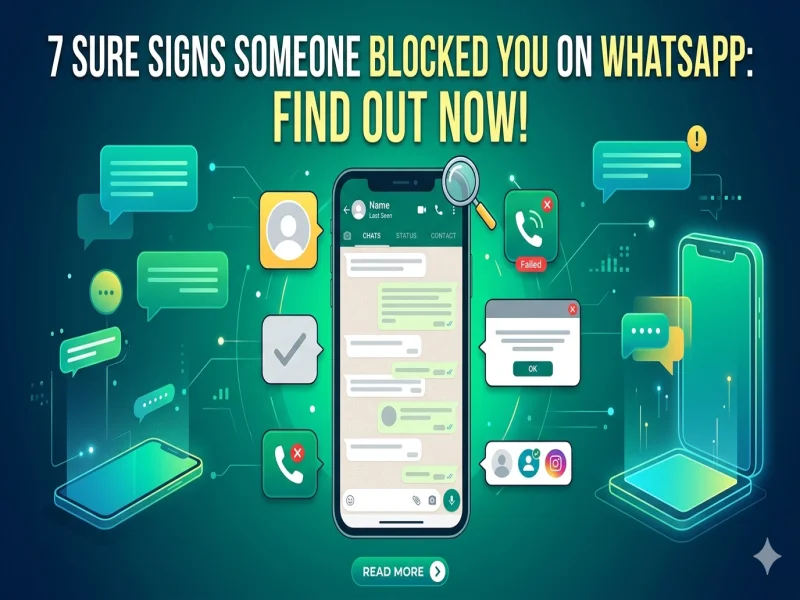
One of the first signs that someone may have blocked you on WhatsApp is the inability to see their "Last Seen" or "Online" status. The "Last Seen" timestamp indicates the last time the person was active on WhatsApp, while the "Online" status shows when they are currently using the app. If you suddenly find that you can no longer see these indicators for a specific contact, it could be a sign that you have been blocked.
However, it's important to note that WhatsApp allows users to hide their "Last Seen" and "Online" status from specific contacts or everyone. Therefore, the absence of these indicators alone is not definitive proof of being blocked. To strengthen your case, you should look for additional signs that corroborate this observation. If you notice other signs in conjunction with the missing status indicators, it becomes more likely that you have been blocked.
In some cases, users may change their privacy settings to hide their activity, so it's crucial to consider the context and recent interactions with the person in question. If they have previously shared their "Last Seen" and "Online" status with you and it suddenly disappears without any explanation, it is worth investigating further. Combining this sign with others can help you draw a more accurate conclusion.
Another clear sign that someone may have blocked you on WhatsApp is the absence of profile picture updates. When a contact blocks you, their profile picture will no longer be visible to you. Instead, you may see a blank silhouette or the default profile icon. If you have been in regular communication with this person and have noticed frequent profile picture changes in the past, the sudden disappearance of their picture could indicate that you have been blocked.
It's important to consider the possibility that the person may have simply removed their profile picture or changed their privacy settings to limit who can see it. However, if you observe this change along with other signs, it strengthens the likelihood that you have been blocked. To be certain, you can cross-check with mutual contacts to see if they can still view the person's profile picture. If they can and you cannot, it is a strong indicator that you have been blocked.
Profile picture updates are a subtle but significant aspect of WhatsApp interactions. They often reflect a person's current mood, interests, or recent events in their life. When you are blocked, this window into their world is effectively closed, leaving you with limited information about their current status. This lack of visual updates can be a telltale sign that your access to their profile has been restricted.
One of the most telling signs that you have been blocked on WhatsApp is when your messages are consistently stuck on one checkmark. When you send a message on WhatsApp, a single gray checkmark indicates that the message has been sent but not yet delivered to the recipient. Once the message is delivered, a second gray checkmark appears, and when the recipient reads the message, the checkmarks turn blue. If your messages to a particular contact are perpetually stuck on one gray checkmark, it is a strong indication that the person has blocked you.
It's important to understand that there can be other reasons for messages being stuck on one checkmark, such as network issues or the recipient's phone being turned off. However, if this situation persists over an extended period and is accompanied by other signs of being blocked, it becomes more likely that you have been blocked. To confirm, you can try sending messages at different times and observe if the status changes. If it remains the same, it is a strong sign that your messages are not being delivered due to being blocked.
Being unable to communicate with someone through messages can be frustrating and confusing. It leaves you wondering if there is a technical issue or if the person is intentionally avoiding you. By recognizing this sign and combining it with others, you can gain a clearer understanding of your situation and decide how to proceed.
Another significant sign that you may have been blocked on WhatsApp is that your calls to the person are not going through. When you attempt to make a voice or video call to a contact who has blocked you, the call will not connect. Instead, you may hear a continuous ringing tone without the call being answered, or the call may fail to initiate altogether. This can be particularly frustrating if you are trying to reach someone urgently or need to have an important conversation.
It's important to consider other potential explanations for calls not going through, such as network issues, the recipient's phone being turned off, or the person being in an area with poor connectivity. However, if you consistently experience this issue with a specific contact and it is accompanied by other signs of being blocked, it becomes more likely that you have been blocked. To further verify, you can try calling from a different phone number or ask a mutual contact to make the call. If their call goes through and yours does not, it is a strong indication that you have been blocked.
Calls are a direct and immediate form of communication, and being unable to connect with someone can leave you feeling isolated and unsure of your relationship status. By recognizing this sign and considering it alongside other indicators, you can gain a better understanding of whether you have been blocked and decide on the best course of action.
Group chats are a popular feature on WhatsApp that allows multiple users to communicate and share information in a single conversation. If you suspect that someone has blocked you, one way to confirm this is by checking your interactions in group chats. When someone blocks you on WhatsApp, you will still be able to see their messages in group chats, but they will not receive any messages you send to the group. Additionally, you will not be able to add the person to a new group chat.
To test this, you can try creating a new group chat and adding the suspected contact. If you are unable to add them to the group, it is a strong indication that you have been blocked. Additionally, you can observe the person's behavior in existing group chats. If they do not respond to your messages or seem to ignore your contributions, it could be a sign that they have blocked you. However, it's important to consider that people may have different reasons for not engaging in group chats, so this sign should be evaluated in conjunction with others.
Group chat exclusion can be a subtle but telling sign of being blocked on WhatsApp. It reflects a deliberate effort by the person to limit their interactions with you, even in a group setting. By recognizing this sign and combining it with other indicators, you can gain a clearer understanding of your situation and decide how to proceed.
WhatsApp Status allows users to share text, photos, videos, and GIFs with their contacts, similar to the Stories feature on other social media platforms. If you suspect that someone has blocked you, one way to confirm this is by checking their Status updates. When someone blocks you on WhatsApp, you will no longer be able to see their Status updates. If you have previously been able to view their Status and suddenly see no updates, it could be a sign that you have been blocked.
It's important to consider that the person may have changed their privacy settings to limit who can see their Status updates, or they may simply not be posting any updates. However, if you notice this change along with other signs, it strengthens the likelihood that you have been blocked. To further verify, you can ask a mutual contact if they can see the person's Status updates. If they can and you cannot, it is a strong indication that you have been blocked.
Status updates provide a glimpse into a person's daily life and activities, and being unable to view them can leave you feeling disconnected. By recognizing this sign and considering it alongside other indicators, you can gain a better understanding of whether you have been blocked and decide on the best course of action.
If you suspect that someone has blocked you on WhatsApp, it's important to approach the situation with caution and sensitivity. Jumping to conclusions without sufficient evidence can lead to misunderstandings and strained relationships. Here are some steps you can take if you believe you have been blocked:
First, review the signs mentioned in this article and consider whether they apply to your situation. Look for a combination of signs rather than relying on a single indicator. This will help you build a stronger case and avoid misinterpretations. If you notice multiple signs that align with being blocked, it becomes more likely that your suspicion is correct.
Next, consider reaching out to the person through an alternative communication method. You can try calling them from a different phone number, sending an email, or using another messaging app. If the person responds positively and explains the situation, it may clarify any misunderstandings. However, if they do not respond or continue to avoid communication, it may confirm that you have been blocked.
Finally, reflect on the nature of your relationship with the person and consider why they may have blocked you. Blocking is often a response to conflict, discomfort, or a desire for personal space. If you believe that your actions may have contributed to the situation, consider offering an apology or giving the person time and space to process their feelings. Respecting their decision and boundaries is essential for maintaining healthy relationships.
Navigating relationships on WhatsApp can be challenging, especially when you suspect that someone has blocked you. Understanding the signs of being blocked and approaching the situation with sensitivity and respect can help you gain clarity and make informed decisions. While being blocked can be a difficult experience, it also provides an opportunity to reflect on your interactions and consider ways to improve your communication and relationships.
Remember that blocking is a feature designed to protect users' privacy and well-being. If someone has chosen to block you, it is important to respect their decision and boundaries. By focusing on positive communication and maintaining healthy relationships, you can navigate the complexities of WhatsApp interactions and build stronger connections.
In conclusion, recognizing the signs of being blocked on WhatsApp can help you understand your messaging status and navigate your relationships more effectively. By approaching the situation with care and consideration, you can foster better communication and maintain healthy connections with the people in your life.







Comments